
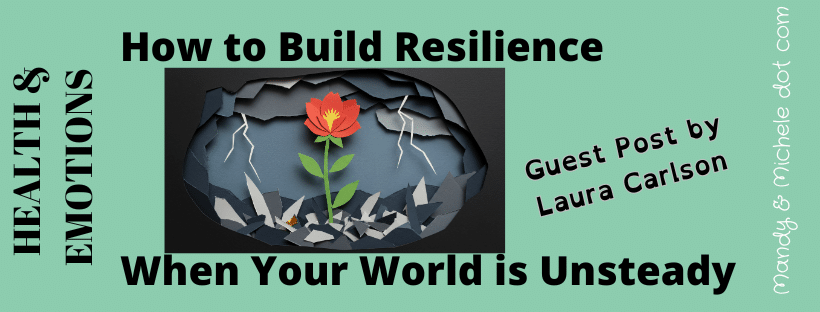
Resilience—the ability to adapt, recover, and keep going—is not a personality trait you either have or don’t have. It’s a set of skills the human mind can learn and strengthen over time. For women living with anxiety, future-proofing your mind isn’t about eliminating worry; it’s about creating enough inner steadiness to meet uncertainty without being overwhelmed by it.
We live in an unpredictable world. Careers shift, relationships evolve, health and finances can change without warning. The question isn’t how to control all of that—but how to meet it with flexibility, self-trust, and emotional balance.
A quick snapshot before we go deeper
- Resilience grows through small, repeatable practices, not dramatic life overhauls
- Curiosity softens anxiety more effectively than forced positivity
- Learning, connection, and emotional skills are protective factors for mental health
- Realistic optimism helps you stay grounded without spiraling into worst-case thinking
Openness to Change: Letting Flexibility Replace Fear
Anxiety often feeds on rigidity—the sense that things must go a certain way to feel safe. Cultivating openness to change doesn’t mean liking uncertainty. It means practicing the belief that you can respond, even if the outcome isn’t ideal.
Try reframing change as information rather than threat. When something unexpected happens, ask: What is this teaching me about what I need next? That question shifts your nervous system out of alarm mode and into problem-solving mode.
Over time, flexibility builds confidence. Each time you adapt—even imperfectly—you reinforce the idea that you can survive disruption.
From “What If?” to “What Can I Learn?”
Managing uncertainty with curiosity is a powerful antidote to anxious rumination. Fear asks, What if everything goes wrong? Curiosity asks, What’s happening here, and what options do I have?
Curiosity slows the mind down. It creates space between the thought and the reaction. You don’t have to suppress anxious thoughts; you just don’t have to follow them to their darkest conclusion.
One simple practice: when anxiety spikes, write down three neutral questions about the situation. No judgments. No predictions. Just observations.
A practical checklist for strengthening mental resilience
Use this as a gentle guide, not a perfection standard:
- ☐ Notice when you’re resisting change and name it without shame
- ☐ Replace one anxious “what if” with a curious “what now”
- ☐ Learn something new each quarter (small counts)
- ☐ Schedule connection like you would any important appointment
- ☐ Practice one grounding or mindfulness habit consistently
- ☐ Balance hope with clear-eyed planning
Mindfulness and Emotional Agility (Without the Pressure)
Mindfulness isn’t about emptying your mind or feeling calm all the time. It’s about noticing what’s happening—thoughts, sensations, emotions—without immediately reacting.
Emotional agility builds on this awareness. Instead of labeling feelings as “bad” or “wrong,” you treat them as signals. Anxiety might be pointing to a value (security, freedom, meaning) rather than a danger.
When emotions are allowed to move, they lose some of their intensity. Suppression fuels anxiety; permission often softens it.
The Quiet Power of Supportive Relationships
Resilience is not a solo project. Supportive relationships—friends, family, mentors, peers—act as emotional shock absorbers. They help regulate stress and remind you who you are when anxiety narrows your perspective.
Quality matters more than quantity. One safe, understanding connection can be more protective than a large social circle that feels draining.
Lifelong Learning as a Mental Anchor
Continuing to learn keeps the mind agile and forward-looking. Whether through hobbies, certifications, or formal education, learning builds confidence and adaptability.
Pursuing flexible online education can be especially helpful during uncertain times. For example, exploring nursing masters degrees allows people to build skills in a field that evolves with real-world needs. Continuing education fosters curiosity, reinforces a growth mindset, and strengthens mental resilience by reminding you that new opportunities are always possible—even when circumstances change.
Balancing Optimism and Realism
Blind optimism can feel invalidating when you live with anxiety. Realistic optimism is different. It acknowledges difficulty and possibility at the same time.
Think of it as grounded hope: This is hard, and I can still take the next step.
Resilience tools at a glance
| Practice | How it Helps | When to Use It |
| Mindfulness | Regulates stress response | During anxious spirals |
| Curiosity | Reduces catastrophic thinking | When facing uncertainty |
| Learning | Builds confidence and adaptability | During life transitions |
| Connection | Improves emotional regulation | Ongoing |
| Realistic optimism | Prevents burnout and avoidance | Long-term planning |
One trusted resource worth bookmarking
If anxiety feels overwhelming, evidence-based guidance matters. The Anxiety & Depression Association of America (ADAA) offers practical tools, educational articles, and support resources grounded in clinical research.
Frequently Asked Questions
Can resilience really be learned if I’ve always been anxious?
Yes. Resilience is a skill set, not a fixed trait. Anxiety doesn’t prevent growth—it often motivates it.
Do I need to feel calm to be resilient?
No. Resilience means functioning with anxiety, not waiting for it to disappear.
How long does it take to feel more resilient?
Small changes can create noticeable shifts within weeks. Consistency matters more than speed.
A steady closing thought
Future-proofing your mind isn’t about predicting what comes next—it’s about trusting your ability to meet it. With curiosity, connection, and continuous learning, resilience becomes less about “being strong” and more about being adaptable. Even in uncertainty, you can build a life that feels grounded, responsive, and genuinely your own.
Thank you, Laura Carlson for another great article on Women’s health.
Other posts at Mandy and Michele your may enjoy
Mandy

Pastor’s Wife (retired) & Chronic Pain Warrior blogs about how to make it through anything by relating her own life experiences to her writing. She is passionate about her love for the Lord and desires to spread that passion to others. She has a great desire to encourage women who are following behind her.